
There was a lot to fit into Day 67 of the End to End, that started at a junction on the B724 near Milnfield. Like yesterday there was a bit of busy road walking to start with but it didn’t get to me as much as yesterday. Maybe I had got a bit more used to it. You certainly have to keep your wits about you. Maybe it was finding a side route to Powfoot which though longer was much quieter. It certainly helped.
Part of the Sustrans network, this was a cycle route and I’ve used lots of them. This one ran alongside the Solway Firth and had beautiful views. Attempts to develop Powfoot as a leisure and health centre at the turn of the 19th century led to the construction of a bathing pool that can still be seen today.
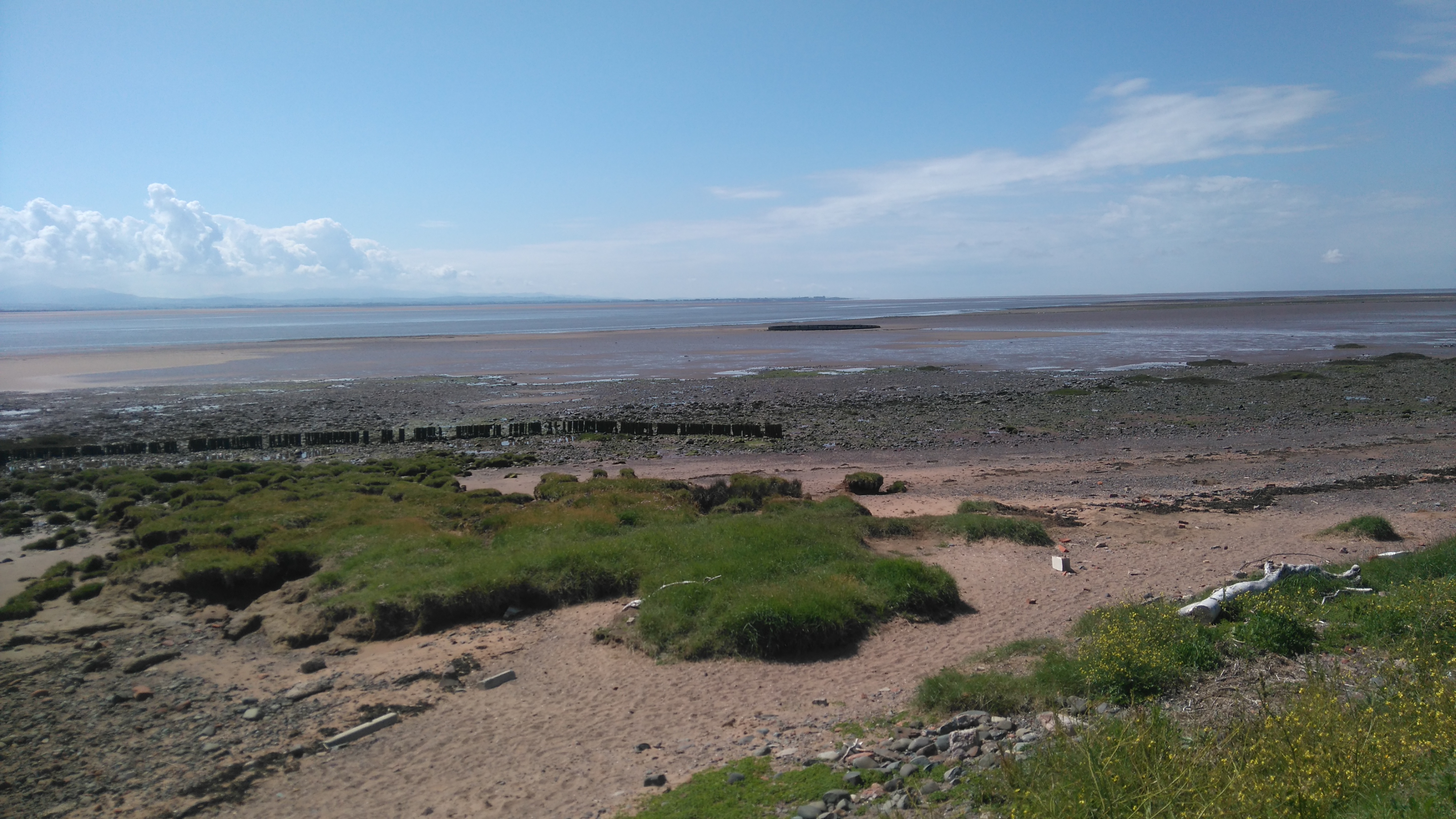
The Powfoot hotel was a lovely place for a cool drink. This was the hottest days walk in a while. My greatest disappointment was the lack of Natterjacks, despite signs to look out for them. Bob joined me for a picnic as the cycle route came back to the road.
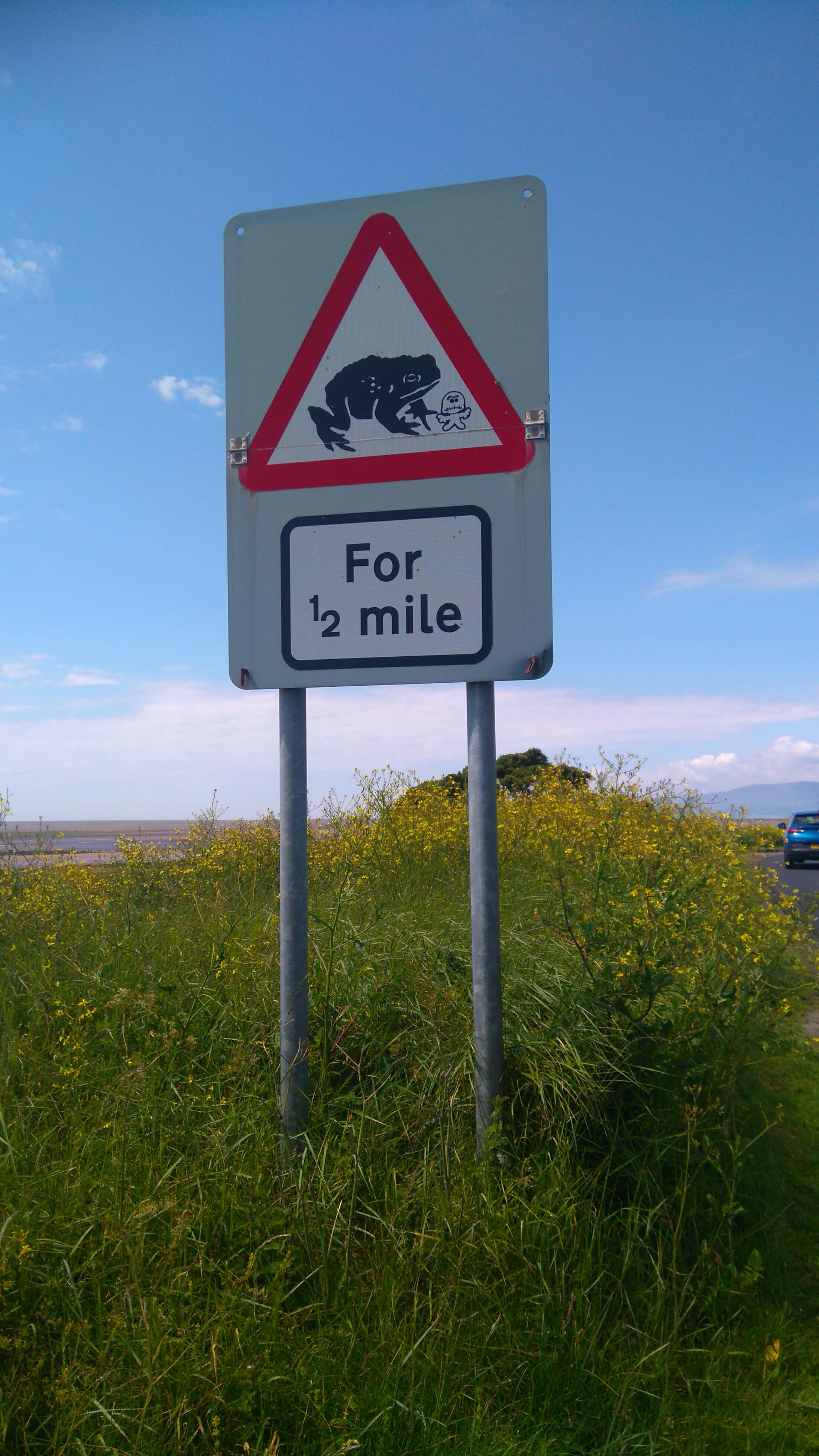
That road was long and straight and was lined with foxgloves, dog roses and comfrey, all showing a great range of colour variation.
It took us to the Ruthwell savings bank museum, which is definitely worth a visit. Site of the first savings bank in Britain, it is part of the history of the Trustee Savings Bank which now owns the building.
The bank was started by Henry Duncan, a local minister. It was the first bank in which women could have account of their own and control it themselves. Children too could open an account for 6d. With the money generated from the savings bank the community was able to open a school and hire a teacher all at a time when working class people lacked access to savings banks.
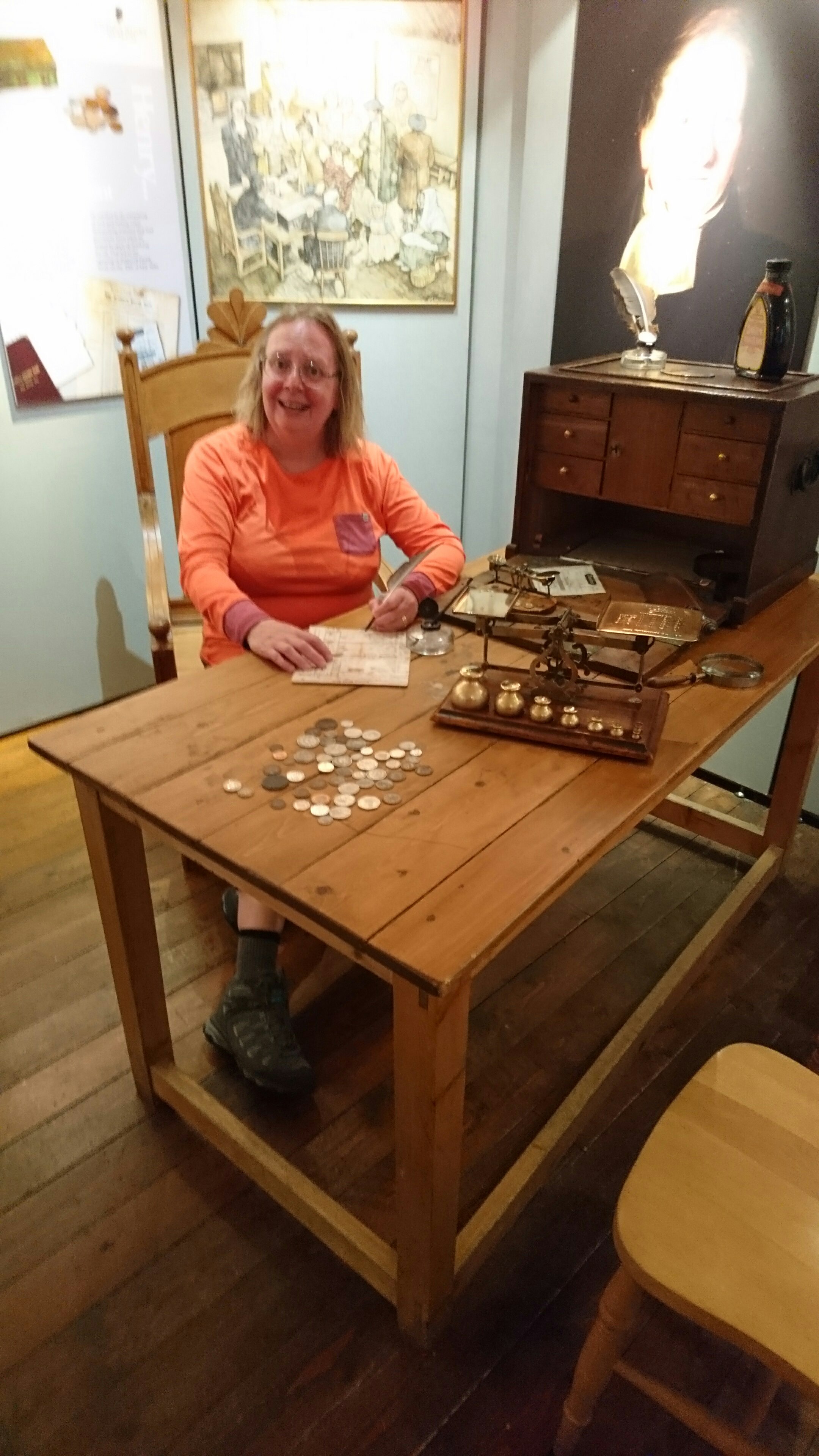
Henry Duncan didn’t stop at the savings bank. His efforts to describe the fossilised footprints of a quadruped found in local sandstone culminated in have an extinct giant tortoise named after him. He was Moderator of the Church of Scotland in due course and then active in the Disruption which lead to the founding of the Free Presbyterian Church in 1842.
However it is the preservation of the Ruthwell cross that I’d primarily come to see. This piece of Anglo-Saxon art still stands in Ruthwell church, next on my itinerary and just up the road.
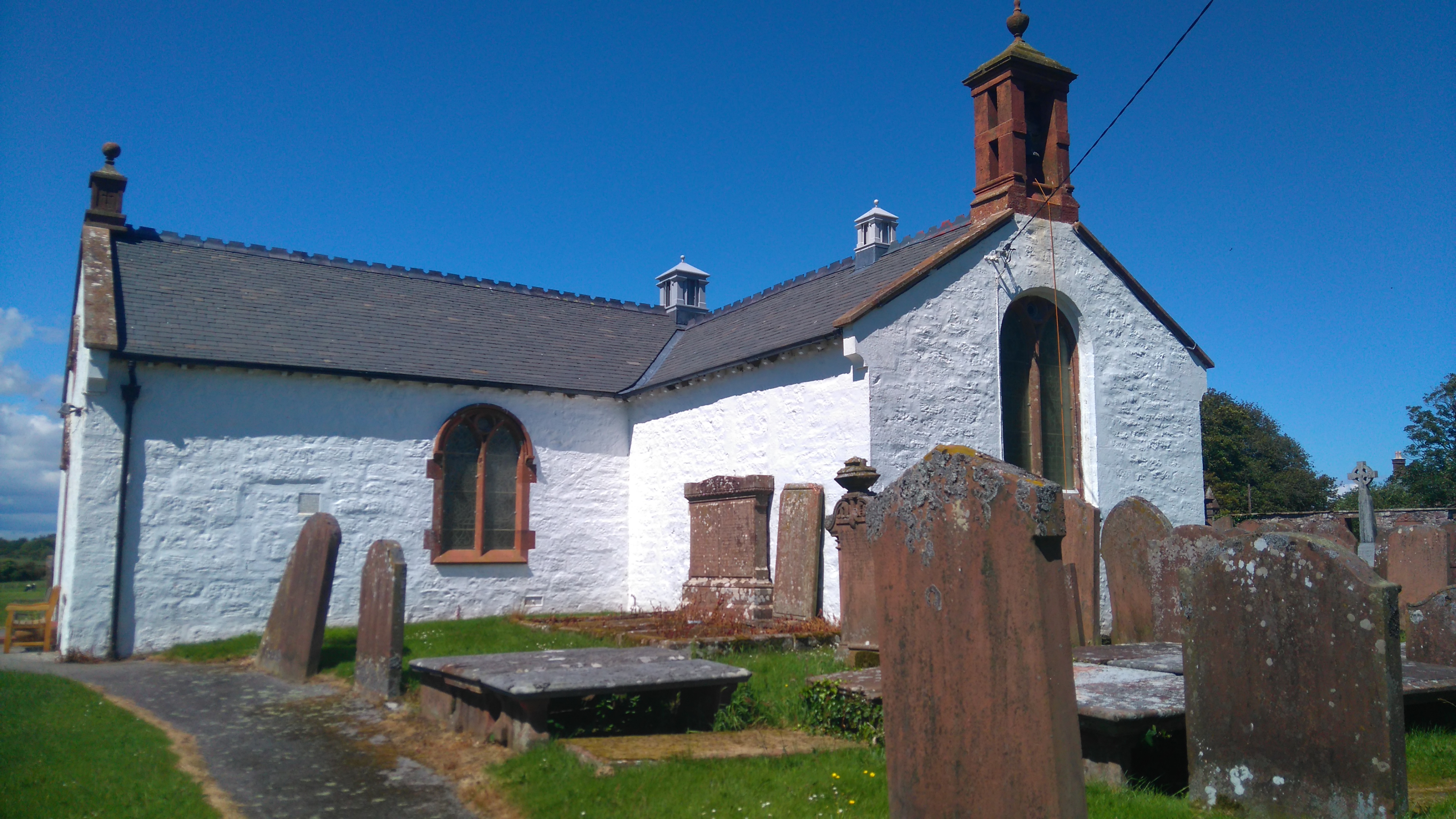
Thought to have been one of a line of pilgrim crosses from Whithorn to Lindisfarne the cross has survived some hard times. Its dismemberment in the 17th century came at the decree of the Church of Scotland. However, today it once again stands in a Church of Scotland church due to the efforts of Henry Duncan.
It is originally thought to have been carved by Italian sculpters and the carvings still show a lot of detail. Most interesting is a panel said to show Mary and Martha, not a pair I’ve seen before on stone crosses of this age. Duncan was unable to find the original cross piece and had another carved to replace it.
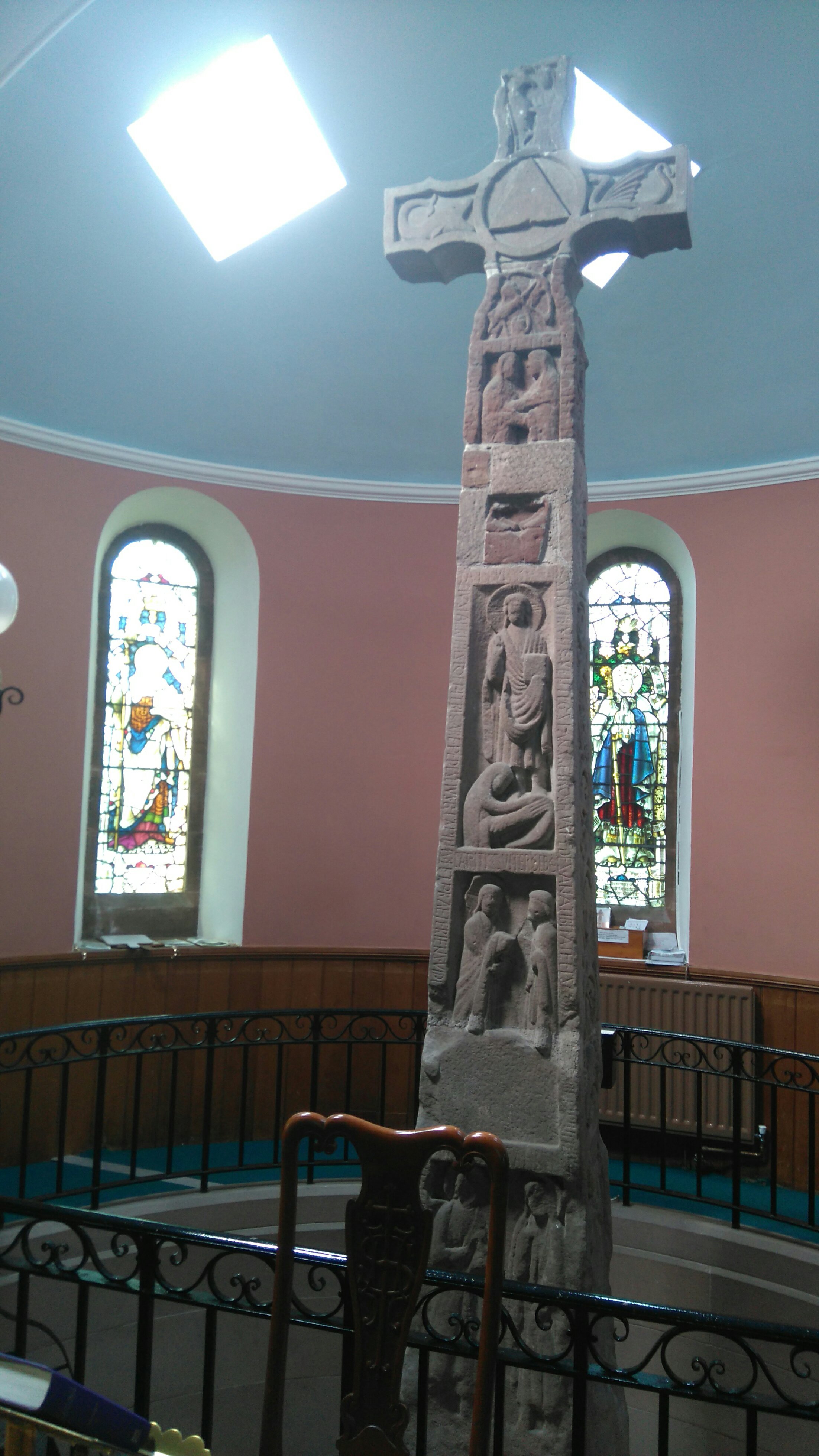
Behind the cross, three stained glass windows depict the Northern Saints: Aidan, Cuthbert and Hilda.
From Ruthwell it was not far to the end of today’s walk at Ruthwell Station, although of course it no longer has one. Luckily Drummuir Farm does now make ice cream and we stopped for a quick one and a bit more research into the Ice Creams of Britain.
From Mark 15
And they crucified him
Here it stands, after all this time,
Silently telling the story,
And central to it all,
Carved in stone and irrefutable:
He was crucified.
When I survey this wondrous cross…
God grant me a quiet night and a peaceful end.
JAL 19.06.2019
Day 67 of the End to End from Milnfield on the B724 to Ruthwell Station